SESAR - Europe's major innovation driver for air traffic
Behind every flight lies a tremendous European collaborative effort - both in daily operations and in all the development happening in the background. Mobility knows no borders. Flights travel through multiple countries in a short period, and air traffic management must operate as one cohesive system. That is why Europe has established a common European airspace, ensuring we have shared concepts, shared technical solutions, and shared standards: Single European Sky. Avinor is an active participant in this collaboration.
At the center of the development is Single European Sky ATM Research - better known as SESAR. This is Europe’s largest initiative to modernize air traffic management. This development includes everything from new operational concepts to next-generation digital tools for air traffic controllers.
What does this mean in practice?
- More efficient use of airports and airspace: Planes can be scheduled smarter and fly more direct routes, while the capacity at airports can be increased without building new physical infrastructure, such as a new runway or terminal.
- Increased safety: Decision support and automated functions reduce risks.
- Lower environmental footprint: Shorter routes, less waiting time, and better coordination lead to lower emissions.
- Better utilization of technology: Digitalization and automation enable new types of services.
SESAR develops solutions that will shape how we fly in the decades to come.
From idea to practice: the path through research and technology development
An important part of SESAR is that ideas are actually tested and further developed to a level where they can be implemented in operational use. From there, development progresses to concrete systems, procedures, and tools that can be used by air traffic controllers, pilots, and aviation stakeholders across Europe. Furthermore, the results pave the way for a common European framework that serves as a basis for national and international legislation.
Avinor's role: active participant and important partner
As a central player in aviation, Avinor has long been a participant in SESAR's research and innovation projects. Together with European service providers, industrial companies, and research communities, we have contributed to the following projects, among others:
Advanced airspace management
The PJ08 AAM project focused on making European airspace more flexible, allowing the "airspace map" to be adjusted based on actual traffic patterns rather than relying on constant, fixed divisions. It developed and tested methods and tools to dynamically change sector boundaries and temporary airspace areas, including improved management of military activity and shifting weather conditions. The goal was to eliminate bottlenecks and detours—thereby reducing delays, fuel consumption, and emissions.
Controller working position / Human Machine Interface
The PJ16 CWP/HMI project focused on modernizing air traffic controllers' workstations and reducing development and operational costs without compromising safety. This was achieved by developing a "virtual center" concept where the actual screen/workstation could be separated from the data center providing the data (more flexible operation and easier resource sharing), and testing new ways of working in the interface (HMI), such as more intuitive input methods and "thin client" technology to increase productivity and reduce strain/stress.
Increased Runway and Airport Throughput
The PJ02 EARTH project focused on enabling airports to handle more departures and landings with their existing runways, as it is often challenging to build new ones. It worked on improving rules and procedures for spacing between aircraft (e.g., due to turbulence/wind) and took weather, noise, and environmental factors into account, allowing capacity to be increased without compromising safety. The goal was to reduce queues and delays, as well as lower fuel consumption and noise.
Total airport management (TAM)
The Total Airport Management (TAM) project aimed to align all entities operating an airport (airport, airlines, air traffic control, etc.) to work according to the same updated “plan for the day,” enabling a shared situational understanding and reducing misunderstandings. It built on the Airport Operations Plan (AOP) and the sharing of information with the rest of the air traffic system (network) to make operations more proactive (preventing problems) instead of “putting out fires” when issues have already occurred. The goal was more predictable and efficient operations, quicker recovery to normal operations during disruptions, and an improved experience for both airlines and passengers through fewer delays.
Total airport management (Wave 2)
As a follow-up to the TAM project, this project developed and tested digital tools such as dashboards and scenario-based analyses (what-if) to manage disruptions like weather and capacity issues, and to improve punctuality and robustness – also by better integrating regional airports into the rest of the network.
Airport airside and runway capacity (Wave 2)
The PJ.02-W2 AART project focused on enabling airports to handle more landings and departures safely and more predictably, especially in areas where queues and delays are common. This was achieved by developing and testing a “toolbox” of many small improvements (32 solutions), such as better arrival and departure procedures (including GNSS-based procedures), smarter spacing rules between aircraft, and improved solutions for smaller airports and poor visibility. The goal was increased capacity and robust operations with reduced environmental impact, while maintaining safety.
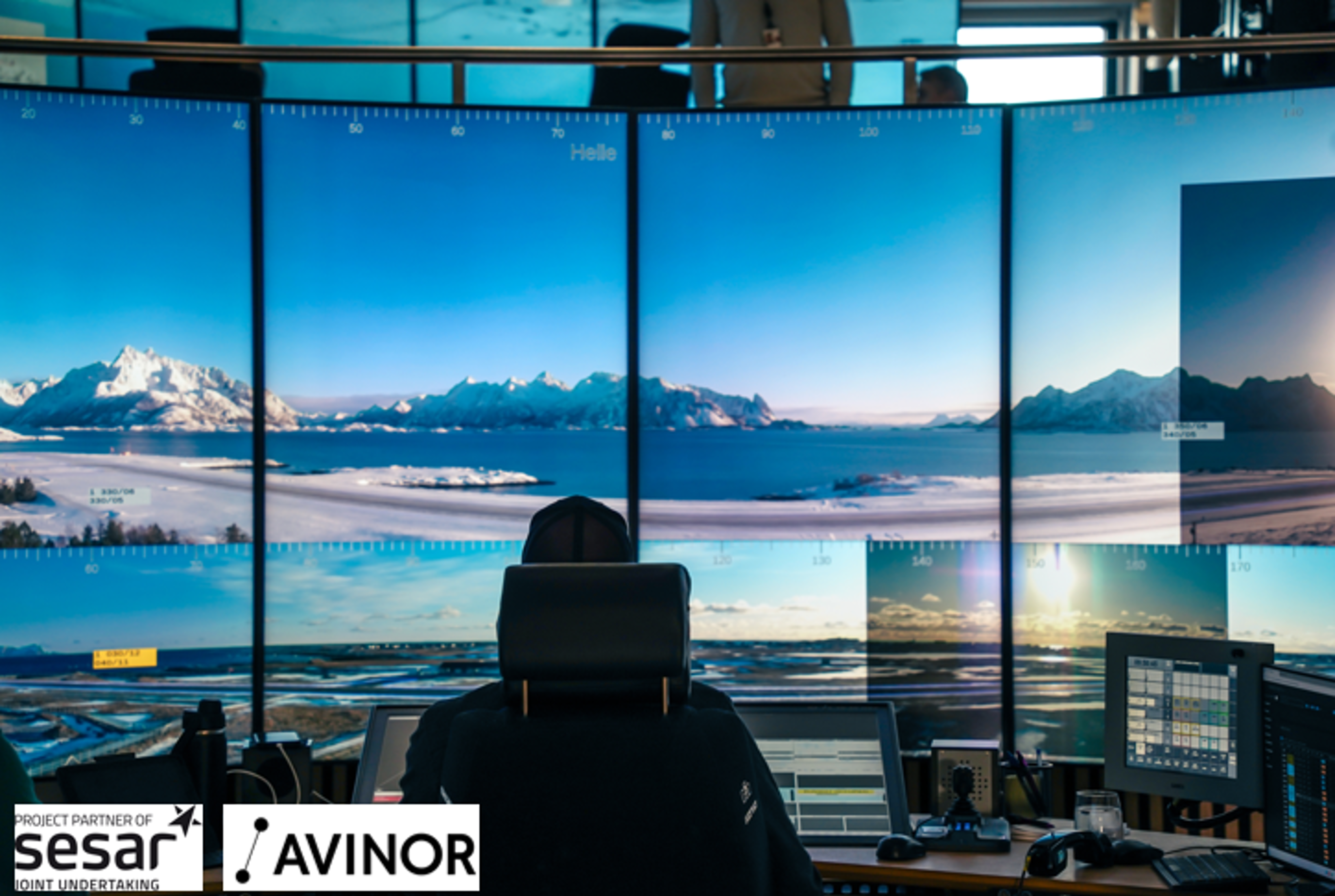
Remote Tower for Multiple Airports
The PJ05 Remote Tower for Multiple Airports project focused on allowing air traffic controllers to manage air traffic at multiple airports remotely from a shared control room by replacing the view from the tower window with cameras and screens. The goal was to use air traffic control resources more efficiently (one controller can handle multiple small airports when traffic is low), making tower services cheaper to operate and making it easier to keep smaller airports open or extend operating hours.
Digital Technologies for Tower
As a follow-up to project PJ05, the Digital Technologies for Tower (PJ05‑W2 DTT) project focused on making control towers more "digital," enabling air traffic controllers to manage traffic at one or multiple airports from a centralized remote control room instead of operating from the tower at each airport. It also tested new and more intuitive ways of working in towers – for example, improved screen solutions and modern human-machine interfaces, including the use of technology that can help air traffic controllers maintain better oversight. The goal was safer and more efficient operations, especially with varying traffic levels and at smaller airports, along with greater flexibility in staffing and organizing tower services. Read more about how Avinor has implemented “digital towers” technology here.
iSNAP - iTEC SkyNex ATC platform
iSNAP is a SESAR project that modernizes our next-generation air traffic management platform, iTEC SkyNex, enabling air navigation services to be delivered more flexibly – regardless of the physical location of the data systems (a "virtual control center"). In practice, this means that control centers can delegate/transfer responsibility for airspace between them (also across countries) by securely connecting air traffic controller workstations to the appropriate data source, allowing better management of peaks, staffing, and deviations. The goal is improved safety, resilience, and scalability in air traffic management, so the service can be adapted more quickly to changing traffic demands.
A stronger European collaboration leads to better Norwegian aviation
We will continue to be an active participant in SESAR's research and innovation efforts. Being part of this collaboration means that Norway:
- Gains early access to new knowledge and solutions
- Can contribute with experiences from a demanding and high-tech airspace
- Ensures that Norwegian needs are heard in European decisions
In this way, we will help shape the foundation for safe, efficient, and modern aviation, also for Norway.