Human Rights and the Transparency Act

Avinor has for several years worked with responsible business conduct, and since 2022 has systematically worked to better meet the requirements of the Transparency Act regarding companies’ efforts to address fundamental human rights and decent working conditions, as well as the OECD framework. Avinor has a comprehensive management system with procedural descriptions for all functions in the company. The work with due diligence assessments is integrated into the company’s internal management system to ensure the implementation of due diligence assessments across all relevant functions of the company.
Due Diligence Assessments
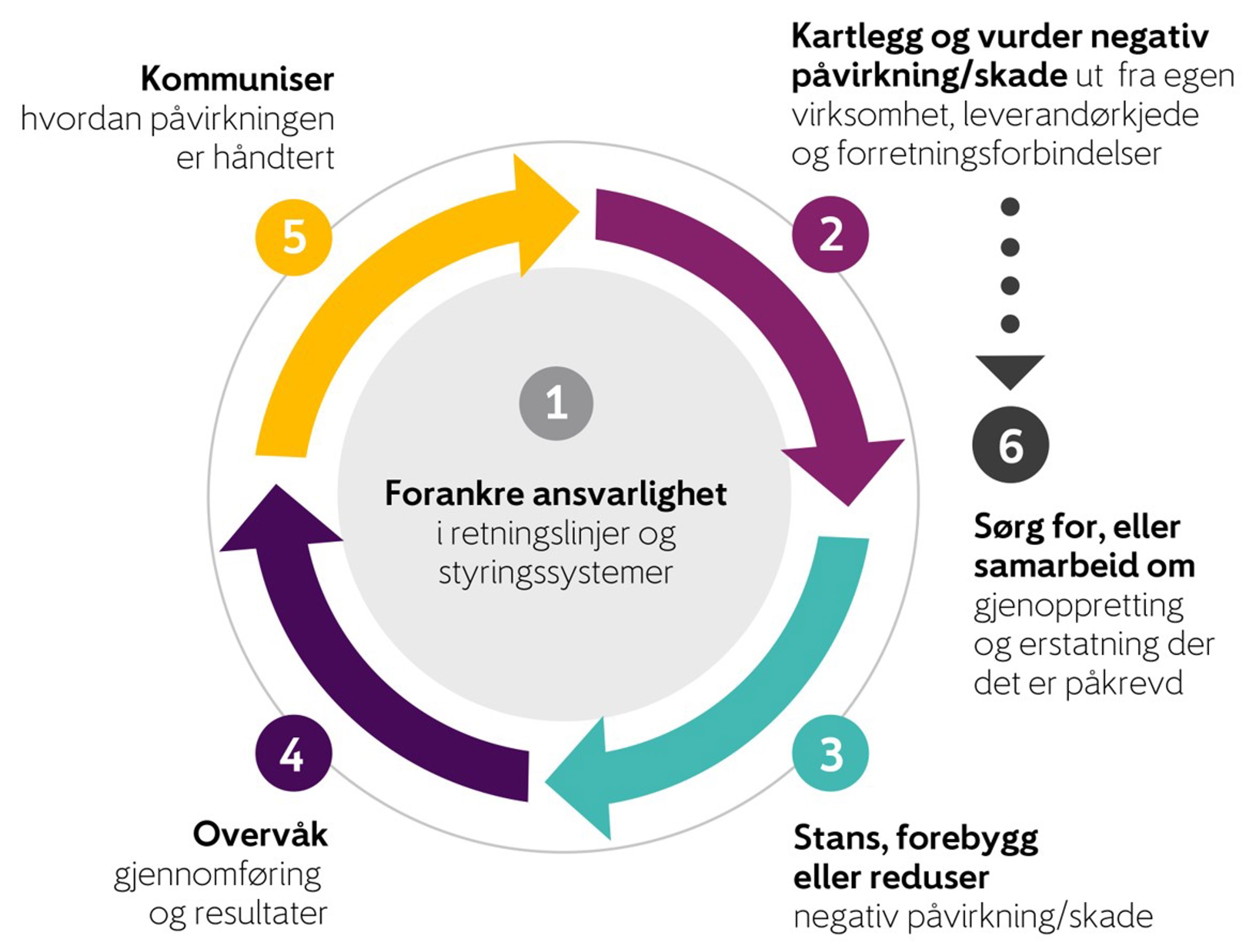
Avinor conducts due diligence assessments in line with the OECD guidelines for responsible business conduct to identify, reduce, and prevent violations of human rights and working conditions. The methodology in the due diligence wheel is implemented in Avinor’s management system through policies, guidelines, and procedural descriptions. The due diligence wheel is integrated into risk assessments. Avinor uses a risk-based approach for due diligence assessments and prioritizes areas where we identify the most significant risks combined with our ability to influence. For our own operations, this means prioritizing conditions that could potentially have the most negative impact on our employees or cause harm to society, people, the climate, and the environment through Avinor’s activities.
The mapping is updated annually based on planned acquisitions and major projects that include procurement of goods or services deemed to carry a potential risk of negative impact. Through public procurement and a significant degree of long-term framework agreements with suppliers, we are often in a good position to address issues in the supply chain in collaboration with our partners and suppliers. In cases where Avinor alone cannot significantly influence the risks, the general rule is to collaborate with other companies and interest organizations to exert influence.
Membership and Collaboration
Through memberships in Ethical Trade Norway and Transparency International Norway, we commit to working for sustainable business practices that respect people, society, and the environment. We participate in relevant industry networks for our business and collaborate with other companies on challenges within sectors or related to specific products.
Complaint Mechanisms, Mitigative Measures, and Reporting
Complaint reporting is an essential tool for gathering information on issues where Avinor impacts surroundings, individuals, or groups. Complaints may relate to incidents affecting individuals at Avinor’s airports or social and environmental issues. Avinor has several complaint mechanisms depending on the interest group and whether the issues are known or unknown. General complaint forms are publicly available at Avinor.no: https://tilbakemelding.avinor.no/
Through Avinor’s reporting channel, both employees and external parties can report reprehensible conditions, anonymously if desired, and to external recipients of complaints. The reporting channel is available at here.
In situations where adverse impacts on human rights caused or contributed to by Avinor are identified, the company will collaborate and ensure access to and/or provide remediation and/or compensation. All complaints and reporting cases are handled through Avinor’s reporting institute in accordance with Norwegian regulations and best practices.
Links Ethics in Avinor
Policy, ethics, and social responsibility in Avinor
Ethical guidelines in Avinor
Ethical requirements for contract partner Avinor
Statement Transparency Act
Contact us
Do you have any questions for us?
Contact: